
How Much Jail Time for a Second DUI in Oregon?
If you were arrested for drunk driving, you already know how fast a DUI case can turn your life upside down. When it is a Second DUI, Oregon courts tend to take a harder line, and the consequences can hit you from multiple directions at the same time. Jail time is usually the first concern, but it is rarely the only one.
This post explains the mandatory minimum jail time for a Second DUII, the maximum exposure, and the practical factors that can push a sentence up or pull it down. We will also cover the DMV timeline, license consequences, and what changes as you move from a 1st offense to a 2nd DUI, then beyond.
The Quick Answer on Jail Time for a 2nd DUII
In Oregon, DUII convictions come with mandatory minimum sentencing. For a misdemeanor DUII conviction, the court must impose at least 48 hours in jail or order 80 hours of community service instead of that minimum in some situations. The maximum jail time for a Class A misdemeanor is 364 days, which means the court has a wide range to work with.
So when someone asks, “How much jail time for a 2nd DUI,” the real answer is that Oregon sets a minimum, but the final outcome depends heavily on the facts, your record, and how the evidence holds up.
Mandatory Minimum vs Maximum Exposure
Mandatory minimums set the floor. Maximums set the ceiling. A Second DUII conviction generally starts with the minimum custody requirement, but the court can go well above that when there are aggravating facts or prior history. Oregon’s misdemeanor DUII framework gives the judge discretion to impose anything from the minimum up to 364 days.
That does not mean every 2nd DUI ends in months of jail. It does mean the consequences can grow quickly when the state argues you were a danger to the public or when the court thinks deterrence is the priority.
What Can Increase Jail Time on a Second DUI
Not all DUI cases look the same, and courts do not sentence them the same. These are common factors that can increase the odds of more custody time beyond the minimum:
- High BAC allegations, especially 0.15% or higher
- A crash, property damage, or alleged injury
- Drug impairment allegations, or alcohol plus drugs
- Driving while suspended, or other license violations
- A minor passenger in the vehicle
- Probation issues, pending cases, or additional criminal law exposure beyond the DUI charge
Even if the stop felt routine, prosecutors may frame a Second DUI as evidence of ongoing risk. That is why the details of the stop, testing, and officer observations matter so much in drunk driving cases.
Other Penalties That Often Matter More Than Jail
Jail is the headline, but many people feel the long-term penalties more than the short-term custody. A Second DUII conviction often brings a stack of consequences that can affect driving, finances, and daily life for years.
Fines and Total Financial Fallout
Oregon sets minimum fines for DUII convictions, including a higher minimum fine if the state alleges a BAC of 0.15% or more within two hours of driving. On top of fines, most people also deal with court costs, treatment expenses, ignition interlock fees, towing and impound charges, and increased insurance costs.
For many drivers, the hardest part of a 2nd DUI is not only the court fine. It is the total cost of staying compliant while also trying to keep working and getting to essential obligations without reliable driving privileges.
Ignition Interlock, Treatment, and Conditions of Supervision
After a Second DUII conviction, ignition interlock requirements are common, and in many cases they extend well beyond the suspension period. Courts also frequently require alcohol and drug screening, treatment participation, and additional conditions that can include a victim impact panel and structured supervision.
If your case is based in the Portland area, it can help to look at your options early, including how interlock and reinstatement issues tend to play out for a Portland DUI lawyer handling the court case and the driving consequences in parallel.
Criminal Court Case vs DMV Case
One of the biggest surprises after being arrested for drunk driving is learning that there can be two separate processes running at once:
- The criminal law case in court, where the state must prove the DUII charge beyond a reasonable doubt
- The DMV administrative process, where your license can be suspended based on a failed test or refusal allegations
In many DUI arrests, the DMV timeline starts quickly. If you want to challenge the administrative suspension, you may have a short window to request a hearing. That is why it is important to review the paperwork you received after the arrest and act fast, even if your first court date is weeks away.
If the arrest happened in Condado de Marion, a conversation with a Salem DUI attorney can be helpful for understanding local court pacing while also staying on top of the DMV track.
How Evidence Challenges Can Change a 2nd DUI Outcome
Even when you are dealing with a Second DUI, the case is not automatically a conviction. DUI defense often comes down to whether the state can prove every element, and whether the evidence was gathered lawfully and reliably.
Common pressure points in Oregon DUI and drunk driving cases include:
- Whether the officer had legal grounds to stop you
- Whether field sobriety tests were administered correctly and in appropriate conditions
- Whether medical issues, injuries, fatigue, or anxiety affected test performance
- Whether breath testing procedures were followed, including required steps and timing
- Whether blood testing chain of custody or lab practices create reasonable doubt
- Whether statements were obtained in a way that raises admissibility concerns
If your stop happened in Washington County, it is often useful to review the stop and testing closely with a Beaverton DUI lawyer who can spot issues that might not be obvious from the police report summary.
Diversion and a Second DUII
Many people remember hearing about diversion for DUI. In Oregon, diversion is limited by eligibility rules, including lookback periods and prior DUII history. As a practical matter, a true Second DUII often makes diversion unavailable. That does not mean you are out of options. It means the strategy shifts toward evidence challenges, negotiation leverage, and sentencing mitigation where appropriate.
1st, 2nd, 3rd, 4th: How Oregon Treats Repeat DUII Allegations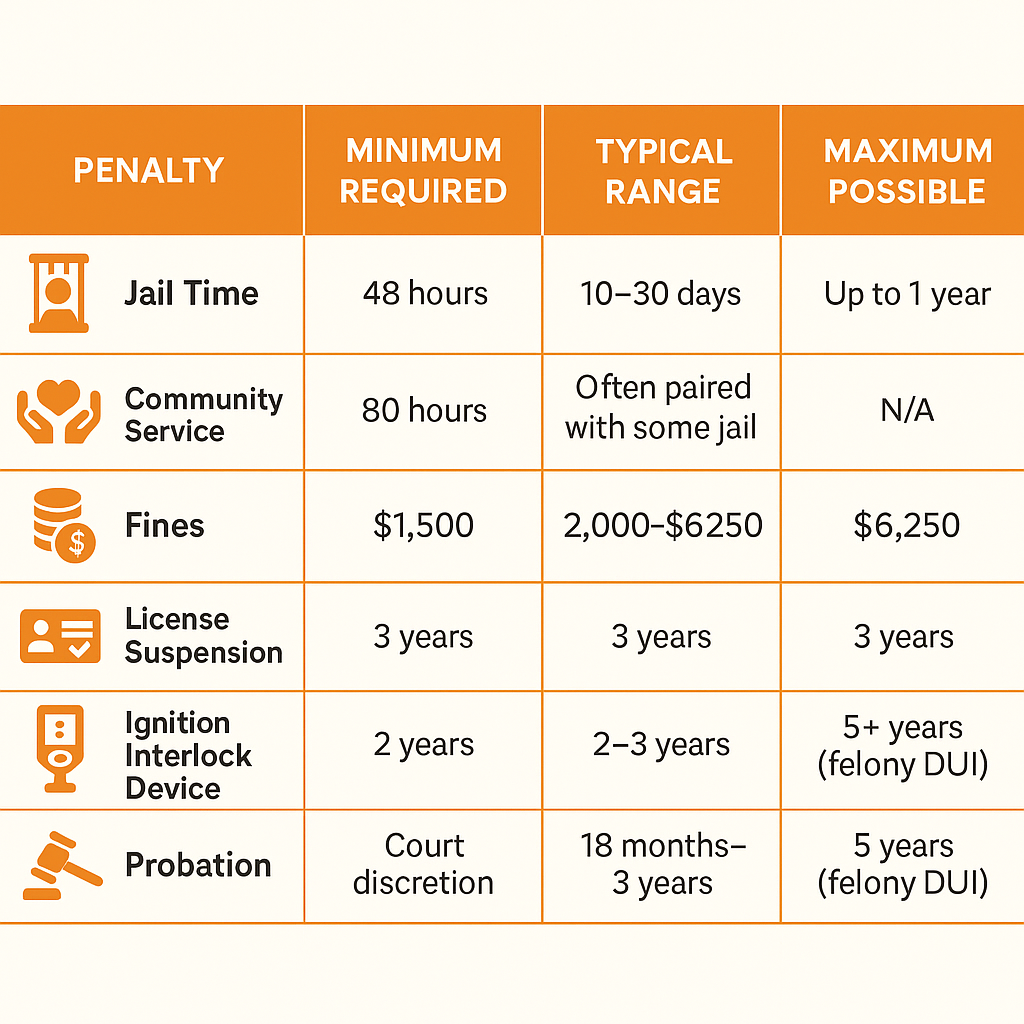
Oregon’s approach on DUI Penalties gets tougher as the number rises, and the jump from misdemeanor to felony can happen sooner than many people think.
- 1st DUII: Some people qualify for diversion, and many experience their first real exposure to how quickly a DUI arrest affects driving and finances.
- 2nd DUI: Mandatory minimum penalties apply, and the court has wide discretion up to 364 days on a misdemeanor.
- 3rd DUII: Depending on dates and prior convictions, a third offense can be charged as a felony, which changes the stakes dramatically.
- 4th DUI: By this stage, prosecutors often pursue harsher outcomes, and long-term license consequences become a serious risk.
If you are unsure how your prior record is counted, especially with older cases or out-of-state matters, it is worth confirming the exact conviction dates before assuming you know where you fall on the ladder.
Local Court Habits Can Affect What Happens on a 2nd DUI
State law sets the framework, but local practice matters. Scheduling, plea policies, and sentencing habits can vary by county, and that can affect how a 2nd DUI is negotiated and resolved.
For example, when a case is filed in Clackamas County, understanding local procedure can be important for everything from motion timing to settlement discussions. That is why many people look for a DUI lawyer in Clackamas who can keep the case moving strategically rather than reacting late.
If your arrest happened in Central Oregon, you may have a different court schedule and different practical expectations, and it can help to speak with a Bend DUI lawyer about what a Second DUI looks like in that area.
What to Do After Being Arrested for Drunk Driving
If you are dealing with a Second DUI or a 2nd DUII allegation, the best move is to act early, not later. A few practical steps can protect you from avoidable damage:
- Write down what you remember about the stop, statements, and testing while it is fresh
- Review your DMV paperwork immediately and track deadlines
- Avoid new violations, especially driving on a suspended license
- Gather any relevant medical documentation if a condition could explain test performance
- Talk to counsel early so evidence and timelines do not slip away
Talk with Gilroy Napoli Short Law Group About a 2nd DUII
A Second DUII is serious, but your outcome is not predetermined. The evidence, the timeline, and the strategy matter. Whether you are dealing with a Second DUI or what feels like a fast moving 2nd DUI case, getting clear advice early can make a real difference in both the criminal law case and the driving consequences.
Gilroy Napoli Short Law Group defends DUI and drunk driving charges across Oregon, including felony DUII matters. You can learn more about our approach to DUII and felony DUII defense, or reach out through our contact page to discuss what happened and what you are facing.
This article is for general information only and is not legal advice for your specific situation.